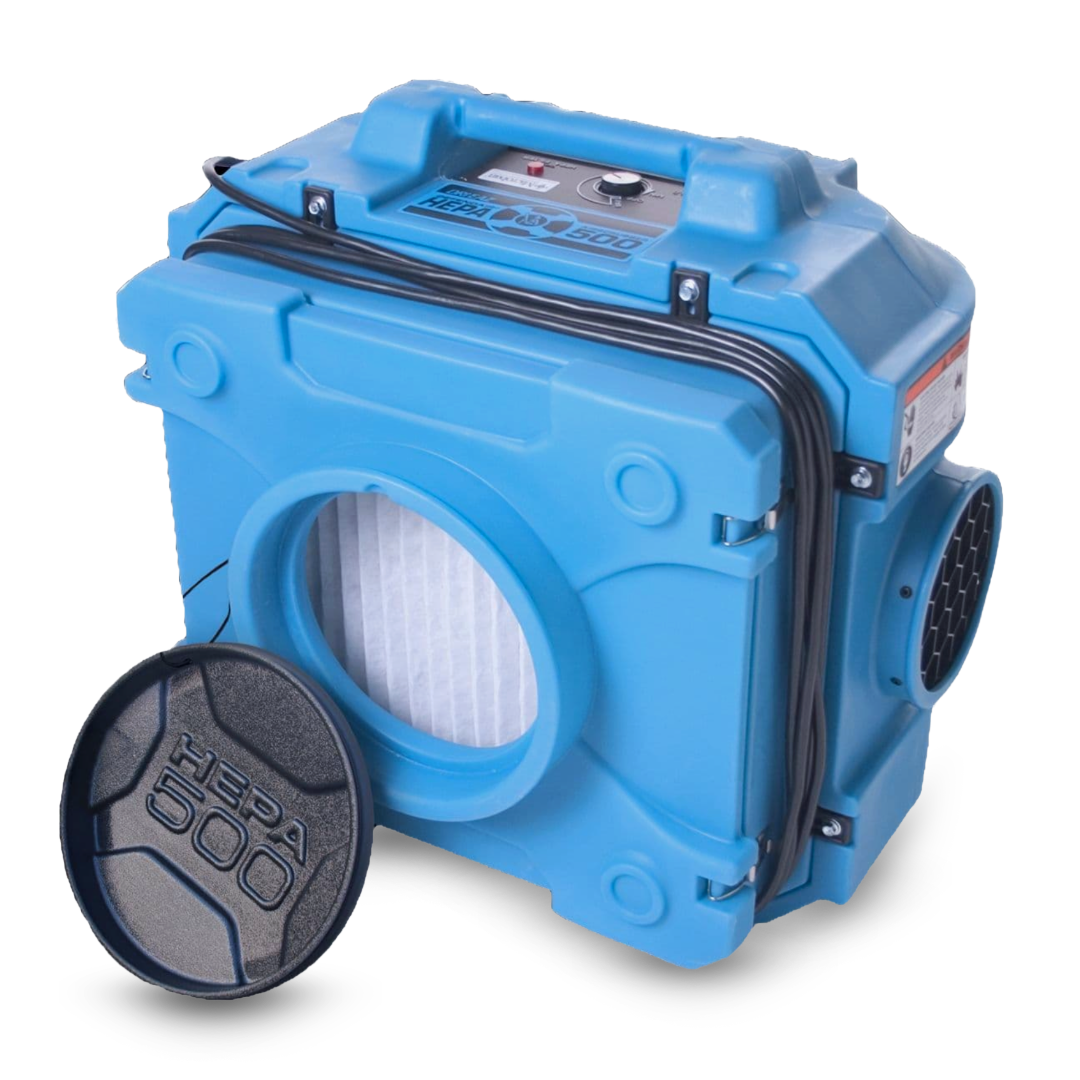
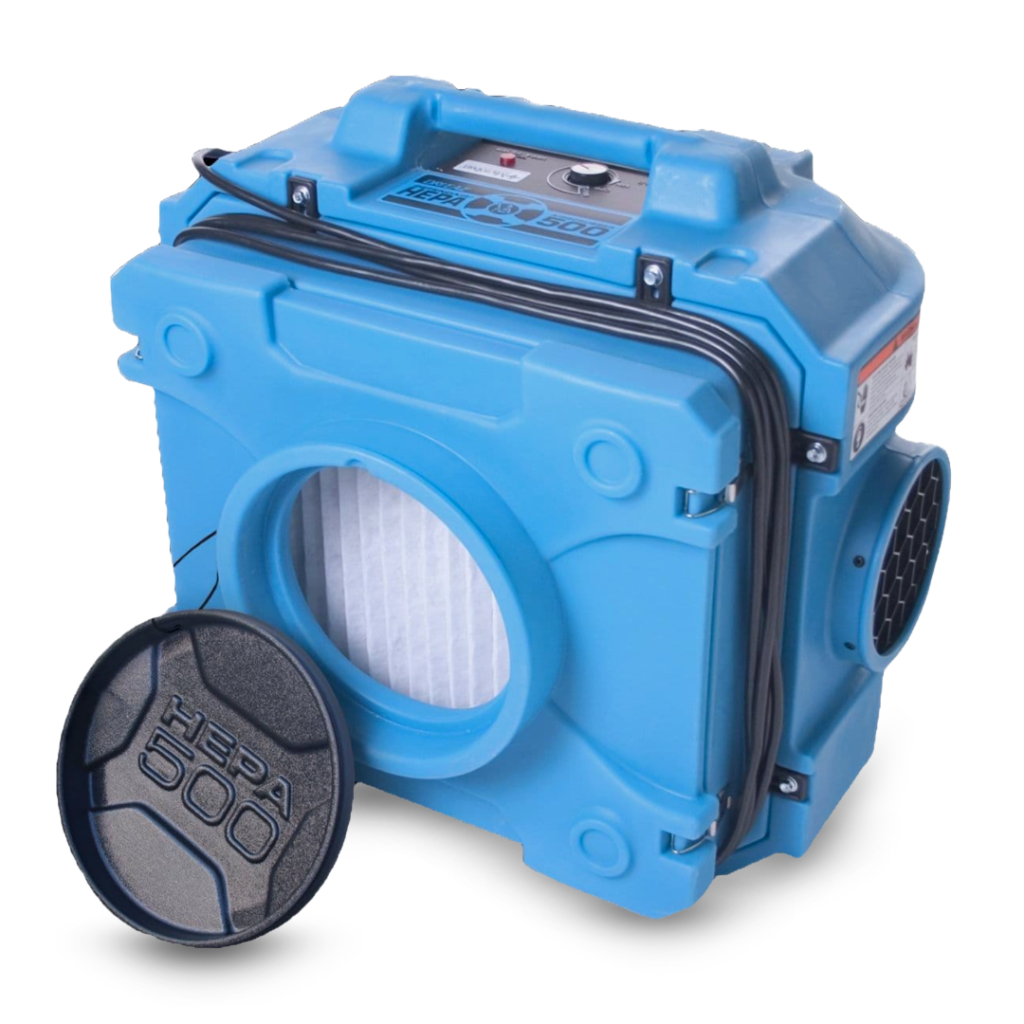
The applications for hired air cleaners on construction sites span the full range of renovation and building activity. Cutting, grinding, and sanding produce fine respirable dust that settles slowly and lingers in the air long after the work stops. Demolition and strip-out releases plaster, gypsum, and concrete particulates. Timber work creates wood dust from both hardwoods and softwoods. Any enclosed work on older properties risks disturbing legacy materials including lead paint dust. In all of these scenarios, a HEPA H13 air cleaner reducing the ambient particle concentration during and after the work reduces the respiratory risk to workers and others in or near the building.
Silica dust deserves particular mention. Silica is a component of concrete, mortar, stone, and sand-cement renders. When cut, ground, or broken, these materials release respirable crystalline silica (RCS) — very fine particles that penetrate deep into the lungs and cause silicosis, an irreversible and potentially fatal lung disease. The HSE has published a Construction Dust Partnership toolkit and Workplace Exposure Limits (WELs) for RCS. Achieving compliance with the WEL for RCS requires source control as the primary measure, with a room air cleaner providing an important secondary layer of protection in enclosed spaces.